sudachirecipes.com
Homemade Shoyu Ramen Noodles (Soy Sauce Flavored Chuka Soba)
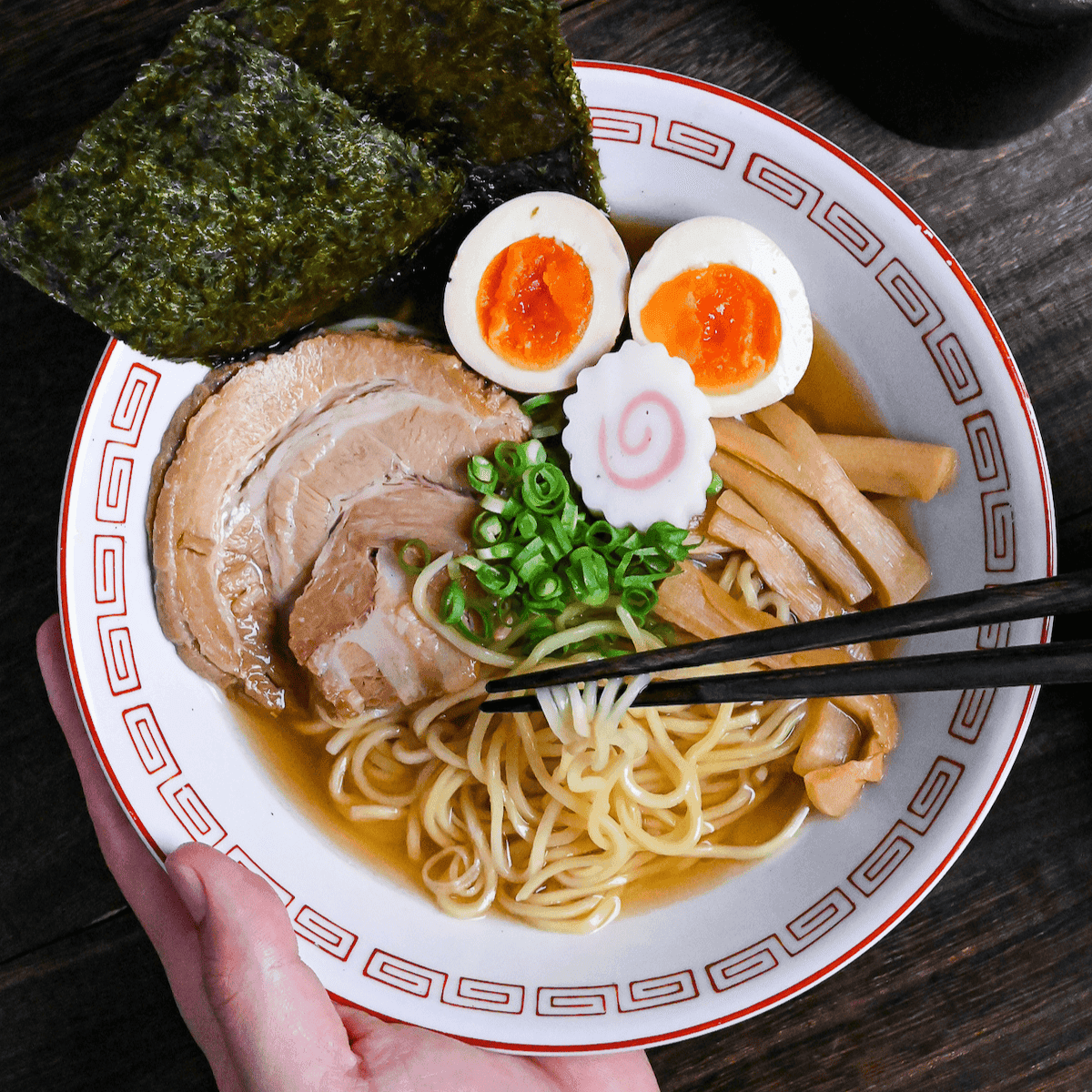
Shoyu ramen is a classic Japanese noodle dish made with a rich chicken and dashi-based broth flavored with soy sauce. Customize with your favorite toppings and enjoy authentic ramen at home!
Prep
5 min
Cook
1h 10m
Total
1h 45m
Serves
2
Instructions
- 01
Take a pot and fill with 1000 ml water. Add 10 g dried sardines (niboshi) and 5 g dried kelp (kombu). Gently heat and hold at 60 °C (140 °F) for 30 minutes to make the dashi base. Make the tare while you wait.
- 02
Grab a small saucepan and add 1 tbsp sake, 1 tbsp mirin, ½ tsp sugar, and 1 pinch salt. Stir and simmer until the salt and sugar have dissolved, the the alcohol smell has burned off.
- 03
Pour 3 tbsp water and 3 tbsp Japanese soy sauce (koikuchi shoyu) into the pan and simmer on low for 5-10 minutes or until slightly thickened (be careful not to over reduce).
- 04
Transfer to a sealable container, then cool and store in the fridge for later. This is your tare, the base flavor for your ramen.
- 05
After 30 minutes of gentle heat, remove the kombu and dried sardines from the pot of dashi. Add 4 chicken wings, 2 garlic cloves, 20 g ginger root, and 1 Japanese leek (naganegi). Heat on medium until small bubbles appear (avoid boiling). Skim any scum that appears at the top for the first 10 minutes, then hold at 80 °C (176 °F) to 85 °C (185 °F) for 40 minutes.
- 06
Heat a large frying pan on low and melt ½ tbsp lard. Spread 50 g chicken skin in a single layer.
- 07
Cover the top of the skin with foil and a heavy heat-resistant weight (like a smaller pot of water) to flatten it.
- 08
Fry for about 10 minutes on each side, or until the skin is golden on both sides and the fat has rendered out. Pour the fat into a heatproof bowl, and enjoy the crispy chicken skin as a snack, or save as a topping for another dish.
- 09
After 40 minutes, turn off the heat and drop in 5 g bonito flakes (katsuobushi). Steep for 5 minutes.
- 10
Set up a fine-mesh strainer or a chinois lined with a paper towel, and set it over a clean bowl or pot. Remove the bulky ingredients, then pour the broth through.
- 11
You should be left with a clear golden broth.
- 12
Cook 2 portions ramen noodles about 20 seconds less than the package instructions say.
- 13
Warm your serving bowls by filling them with hot water. Pour it out right before the noodles are ready, and divide the tare equally between the bowls.
- 14
Pour the hot broth (approx 300ml) into each bowl and stir to evenly distribute the tare. Make sure not to overfill, as you will be adding noodles and toppings.
- 15
Drain the noodles and gently lower them into the bowl.
- 16
Drizzle the rendered chicken fat over the top and add your favorite toppings. I opt for pork chashu, ramen egg, seasoned bamboo shoots (menma), narutomaki fish cake, roasted seaweed for sushi (nori), and finely chopped green onions. Enjoy!
Nutrition
per serving · 672 g
- Calories
- 524
- Protein
- 15.7g
- Carbs
- 74.1g
- Fat
- 16.1g
- Fiber
- 6.7g
- Sugar
- 0.6g
- Sat. fat
- 4.6g
- Sodium
- 2227mg
- Cholesterol
- 56mg
Variations & swaps
Substitutions, Variations, and How to Customize
- Here is the honest truth about a homemade shoyu bowl. 3 things are non-negotiable: Japanese dark soy sauce, a fish-and-kombu dashi layered with the chicken stock, and noodles made with kansui. Everything else has a swap that gets you most of the way there.
Substitutions:
- Chicken skin → Store-bought chicken oil (or schmaltz), duck fat, or goose fat: If you can find rendered chicken oil (chi-yu), melt 1 to 2 tablespoons of it down and drizzle it on at the end. That skips the whole rendering step. Duck fat or goose fat does the similar enough job with a slightly richer aroma. The aroma oil is structural, but the source of the fat is flexible.
- Niboshi, kombu, katsuobushi → Pre-made dashi packets: A real dashi packet is a clean swap and saves you a whole step. 1 warning. I personally don’t recommend substituting in dashi made from instant granules. The flavor stops being clean and tilts cloudy and a bit junky.
- Kombu → Korean dasima: Korean dasima at any Asian markets is the same kelp species.
- Chicken wings → Drumettes, wingettes, or chicken backs: Same purpose, similar yield. Drumettes have a touch more meat. Wingettes are pure gelatin and skin. Chicken backs for a couple of bucks a pound give you the cleanest stock-to-meat ratio if you can find them.
- Green parts of negi → Green parts of leek: Leek tops work cleanly. Thin scallions, on the other hand, will not cut it here.
- Have trouble finding Japanese ingredients? Check out my ultimate guide to Japanese ingredient substitutes!
Variations:
- Make-ahead tare: Build the shoyu tare a full week ahead. Store it in a clean glass bottle in the fridge. The salt edge softens, the aroma compounds settle, and by day 3 to 7 the tare reads rounder and deeper. This is exactly the kaeshi tradition the Edo-era soba shops were running with their dipping sauces. Same chemistry, different bowl.
- Stretched dashi: If kombu and katsuobushi and niboshi are pricey where you live, halve the amounts in the recipe and you still get a credible bowl. Or keep the full amounts, bump the water from 1 liter to 2 liters, make a double batch, and store half for next weekend. Adjust this to fit your kitchen reality.
Free · No ads
Save this recipe to your own library.
iCook.ing is a free recipe library. Create an account in 10 seconds to save this recipe, plan your week, and head to the store with one shopping list.
Save from anywhere
Paste a link from a recipe blog, Instagram, TikTok, Facebook, or Pinterest — we pull the ingredients, steps, and photo.
Plan your week
Drag recipes onto a weekly plan, scale for the number of people you're feeding, and never wonder what's for dinner.
One shopping list
Your plan rolls up into a single, de-duplicated shopping list — sorted by aisle so the store run is faster.
Cook, don't scroll
Big, screen-stays-awake cook mode with built-in timers. No ads. No life story above the recipe.