justonecookbook.com
Teriyaki Salmon
Use this quick and easy Teriyaki Salmon recipe to make a light and savory meal any night of the week. Salmon fillets are pan-grilled to tender perfection in the traditional method and finished with an authentic homemade teriyaki sauce.
Prep
5 min
Cook
10 min
Total
15 min
Serves
2
Instructions
- 01
Gather all the ingredients.
- 02
In a microwave-safe bowl, combine the ingredients for the teriyaki sauce: 1 Tbsp sake, 1 Tbsp mirin, 2 Tbsp soy sauce, and 1 Tbsp sugar. Mix well to dissolve the sugar.
- 03
To help dissolve the sugar, you can microwave the mixture for 30 seconds.
- 04
Rinse 2 skin-on salmon fillets and pat dry. Season one side with some of the ¼ tsp Diamond Crystal kosher salt and ⅛ tsp freshly ground black pepper. Tip: The salmon skin will hold the flesh together while cooking.
- 05
Flip over and season the other side with the remaining salt and black pepper.
- 06
Sprinkle half of the 1 Tbsp all-purpose flour (plain flour) on one side of the salmon and coat evenly. Tip: Coating the salmon with flour helps retain its umami flavor and juiciness. It also helps absorb the sauce and thickens it.
- 07
Flip over and sprinkle the rest of the flour on the other side. Gently press it to adhere, then remove the excess flour.
- 08
Heat a frying pan over medium heat. When hot, add ½ Tbsp neutral oil and 1 Tbsp unsalted butter. Do not burn the butter. If the pan gets too hot, reduce the heat or move the pan off the heat temporarily. Next, sear the salmon skin: One fillet at a time, press the skin against the hot pan‘s surface for 15 seconds before laying the fillet skin side down in the pan. Repeat with the other fillet. Tip: The presentation side (the skin side) should go into the pan first because you will get the best browning on the first side that hits the clean pan.
- 09
Cook the salmon for 3 minutes until the bottom is golden brown, and then flip.
- 10
To the pan, add 1 Tbsp sake—1 Tbsp for thin fillets and no more than 2 Tbsp for thicker fillets. Cover the pan with a lid and reduce the stove‘s heat to low. Steam the salmon for about 3–5 minutes, depending on the fillet thickness. If the sake has evaporated but the salmon isn‘t cooked through yet, add another tablespoon of sake and continue steaming.
- 11
Cook the salmon until it registers an internal temperature of 125–130°F (52–54ºC) at the thickest part of the fillet (I use a Thermapen instant-read thermometer). Then, transfer the salmon to a tray or plate. These fillets were about ¾–1 inch (2–2.5 cm) thick and took roughly 4 minutes to cook. Tip: The USDA recommends cooking fish to an internal temperature of 145°F (63ºC); however, the residual heat will continue to cook the salmon, so you must remove the fillets at 125–130°F (52–54ºC) to avoid overcooking.
- 12
Add the teriyaki sauce ingredients to the pan and increase the heat a bit. When the sauce starts to boil, add the salmon back to the pan.
- 13
Spoon the sauce over the salmon. When the sauce thickens, turn off the heat. Transfer the salmon to a plate and drizzle the sauce on top.
- 14
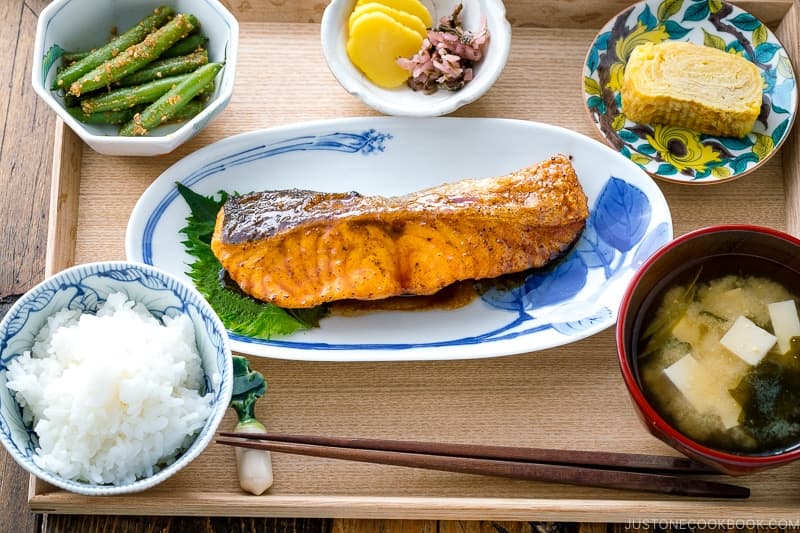
Serve immediately. I like to serve my Teriyaki Salmon as part of a Japanese-style meal with Green Bean Gomaae (Sesame Dressing) or pan-seared asparagus, Tamagoyaki, Homemade Miso Soup, and Steamed Rice. Other side dishes that pair well with this savory-and-sweet salmon include Spinach with Sesame Miso Sauce, Japanese Potato Salad, Blanched Broccoli with Sesame Oil, Green Bean with Crumbled Tofu and Sesame, Brussels Sprouts with Bacon, and Roasted Cauliflower Kale Salad.
- 15
You can keep the leftovers in an airtight container and store in the refrigerator for up to 3 days and in the freezer for 2 weeks.
Nutrition
per serving · 1 serving
- Calories
- 274
- Protein
- 24g
- Carbs
- 9g
- Fat
- 13g
- Fiber
- 1g
- Sugar
- 6g
- Sat. fat
- 5g
- Sodium
- 723mg
- Cholesterol
- 77mg
Variations & swaps
Substitutions
- All-purpose flour: Use cornstarch or potato starch for gluten-free.
- Sake: You can substitute Chinese rice wine, dry sherry, or water.
- Mirin: If you can’t find it, substitute 1 Tbsp sake (or water) + 1 tsp sugar for every 1 Tbsp mirin. The flavor won’t be the same, but it’s close.
- Soy sauce: Use gluten-free soy sauce or tamari if needed.
Variations and Customizations
- Play with the sauce ratios. In Japanese cooking, we commonly adjust the seasonings to taste. For example, you can use less or low sodium soy sauce and reduce the amount of sugar accordingly by a teaspoon or so.
- Try a different fish. You can use this same cooking technique to make Yellowtail Teriyaki, a classic Japanese grilled fish recipe.
- Make it vegan/vegetarian. Crispy outside, soft inside—my Teriyaki Tofu offers a delicious textural contrast.
- Try it with chicken. You could skip the salmon and go straight to my Chicken Teriyaki and Teriyaki Chicken Meatballs recipes.
Free · No ads
Save this recipe to your own library.
iCook.ing is a free recipe library. Create an account in 10 seconds to save this recipe, plan your week, and head to the store with one shopping list.
Save from anywhere
Paste a link from a recipe blog, Instagram, TikTok, Facebook, or Pinterest — we pull the ingredients, steps, and photo.
Plan your week
Drag recipes onto a weekly plan, scale for the number of people you're feeding, and never wonder what's for dinner.
One shopping list
Your plan rolls up into a single, de-duplicated shopping list — sorted by aisle so the store run is faster.
Cook, don't scroll
Big, screen-stays-awake cook mode with built-in timers. No ads. No life story above the recipe.